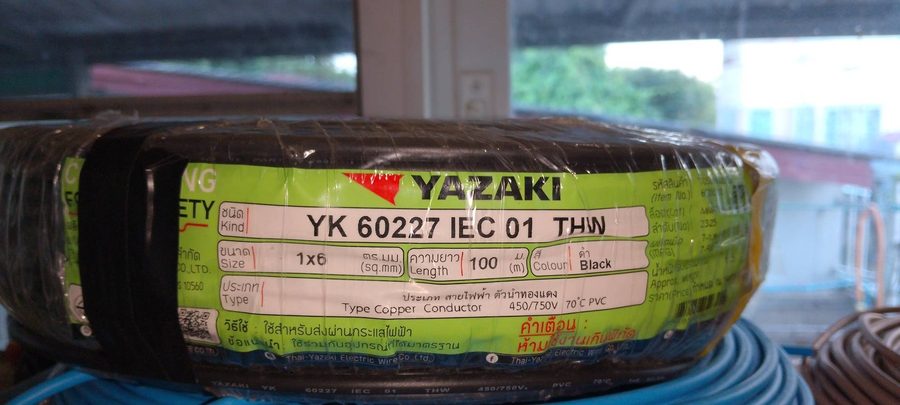
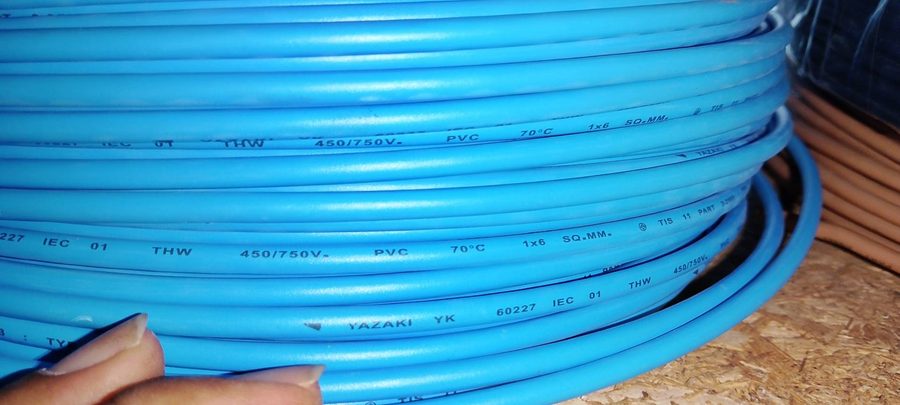
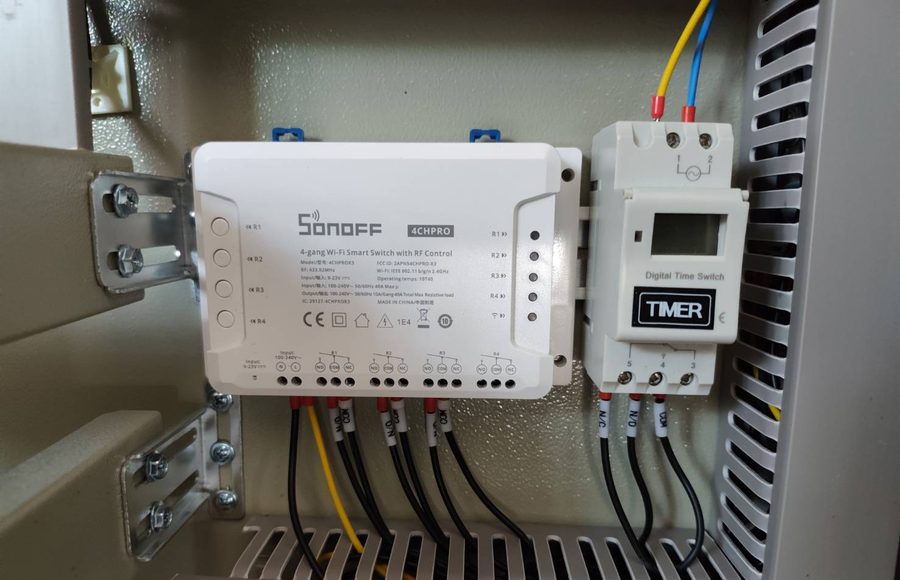
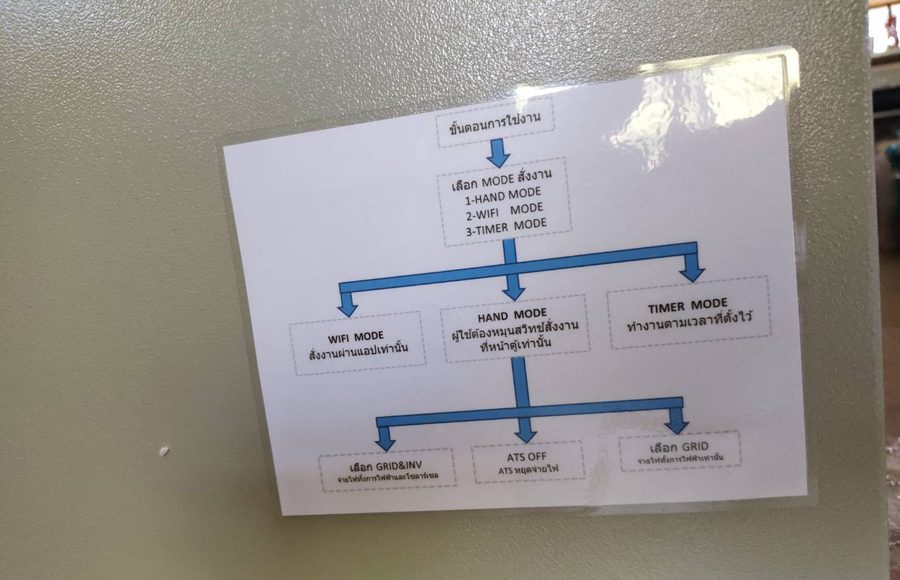
Every part on this page is one we fit on our own sites. Our best option for most projects is a Huawei inverter with LONGi back-contact panels, protected by ABB, CHINT and SUNTREE switchgear and wired in copper from Yazaki and LINK. Below is the reason behind each choice, and the alternatives we trust.
We install all sorts of brands: Huawei first, with five alternatives we trust
The right brand depends on the site: roof shading, phase balance, battery plans and budget.
The inverter is the heart of a solar system.
It turns the DC power from the panels into the AC power your home or business uses, decides when to charge the battery or draw from the grid, and shuts the system down safely when something is wrong. It is also the part most likely to need attention over 20 years, so we choose on service first and price second.
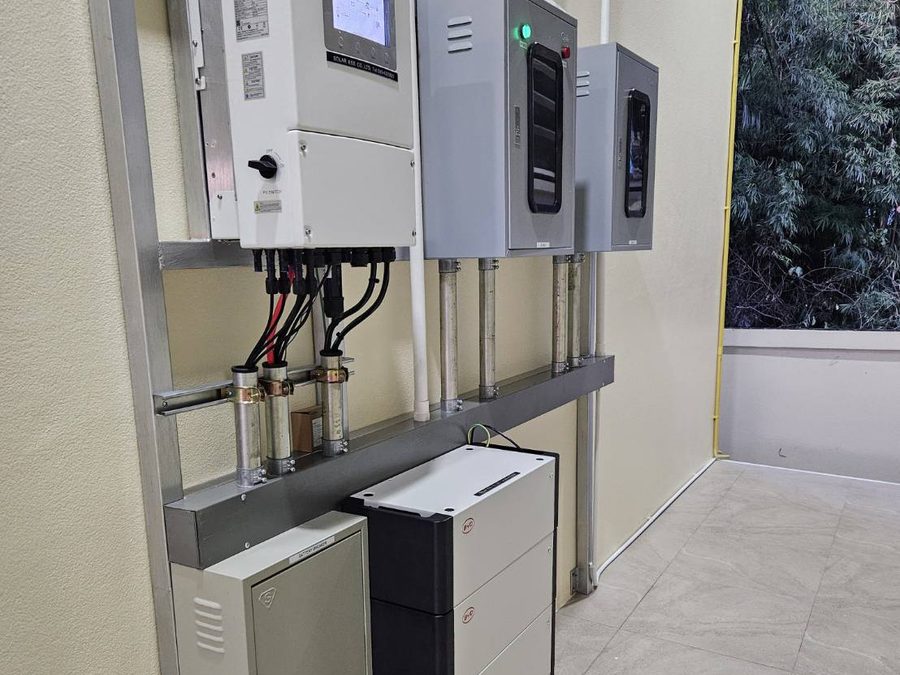
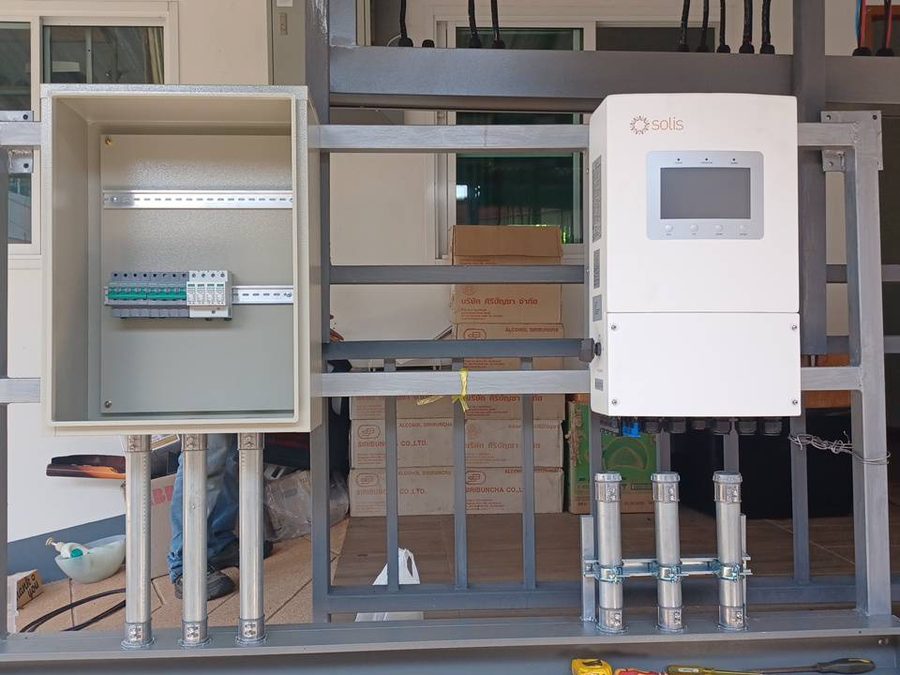
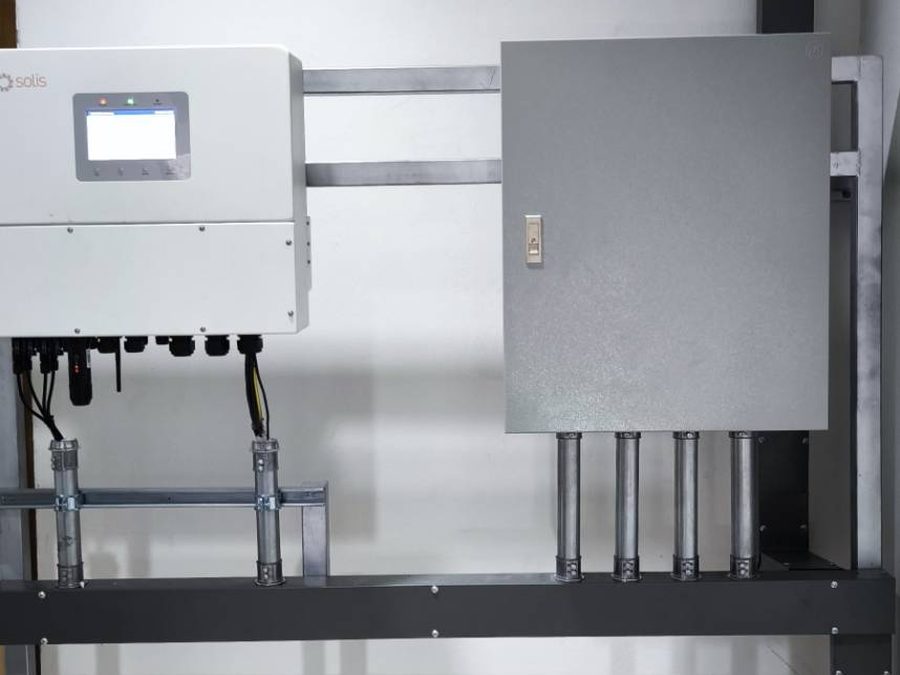
Hybrid inverter with batteryInverter and AC/DC combiner boxIndoor installation over a wireway
Our first choice · 5 kW to 100 kW
Huawei
Huawei is the inverter on most of our sites. What we love most is the service system behind it. We can submit a ticket directly to Huawei, no matter where your installer or supplier is, and you are treated as Huawei's own customer.
If a unit has to be claimed, Huawei delivers the replacement to your door and collects the faulty one for investigation.
Homes with uneven loads
Solis
We love how it supports an unbalanced system at home, where the three phases carry different loads, and its practical remote app.
Microinverter
Enphase
A long-term warranty and a worry-free option for owners who want to fit it and forget it.
Microinverter
ATMOCE
We love its safety and durability. Each panel has its own small inverter, so there is no high-voltage DC cable running across the roof.
All-in-one storage
Sigenergy
Inverter, battery and energy management in one modular stack. Battery modules can be added as needs grow, with an EV charger option in the same system.
Shaded and complex roofs
SolarEdge
We love the optimizers, which let every panel work at its own best, and the long warranty. The monitoring app is excellent.
The newest step in a long line of improvements. Here is how panels got to this point.
Each generation of solar panel has turned a little more of the same sunlight into electricity.
Amorphous and thin filmA thin layer of silicon or another material laid on glass or a flexible sheet. Cheap and light, and familiar from pocket calculators, but low in output, so a roof needed a large area for little power.
MonocrystallineCells cut from a single silicon crystal. More power from the same area and a longer life, which made mono the standard for rooftops.
PERCA reflective layer added to the back of the cell sends unused light back through the silicon for a second chance at being absorbed.
BifacialGlass on both sides, so the panel also collects light reflected from the ground or roof onto its back.
Back contact (HPBC and ABC)All the metal wiring moves to the back of the cell. Nothing on the front blocks the light, and the whole face of the cell works.
Our standard panel
LONGi HPBC
HPBC stands for Hybrid Passivated Back Contact, the technology in LONGi's Hi-MO X10 range. With no busbars on the front, more light reaches the cell and the panel has a clean, all-black face.
It gives high output per panel, so the same system needs fewer panels, fewer roof fixings and less cable. It also copes better when part of a panel is shaded by a tree, a pole or a neighbouring roof.
Also installed
AIKO ABC
ABC stands for All Back Contact, used in AIKO's Neostar range. Both the positive and negative contacts sit on the back of the cell, leaving the front completely clear.
It is among the most efficient panels available for rooftops, and handles partial shading well, which suits small or awkward roofs where every square metre counts.
Compared · October 2026
AIKO or LONGi?
On technology the two are almost a tie. Both lose 0.26% of power per °C, age at the same rate and carry the same 15-year product and 30-year performance warranties. In the same size frame, the AIKO sold in Thailand gives 670 W against 650 W for the LONGi.
On price there is no clear winner: in Thai shops both cost about the same per watt. LONGi is the larger company, shipping about three times as many panels. We choose between them by roof space and the supplier price on the day.
Sized to the cable and the inverter on every circuit, DC and AC.
A breaker is cheap until the day it has to work. This is the wrong place to save money.
What we fit
AC breakers
ABB, IPG
DC breakers
SUNTREE
DC fuse holders
SUNTREE
MCCB, main and changeover boards
CHINT
Why we pick it
Each breaker is matched to the cable it protects, so the breaker trips before the cable overheats.
DC circuits get breakers rated for DC. An AC breaker on a DC string cannot be relied on to break the current.
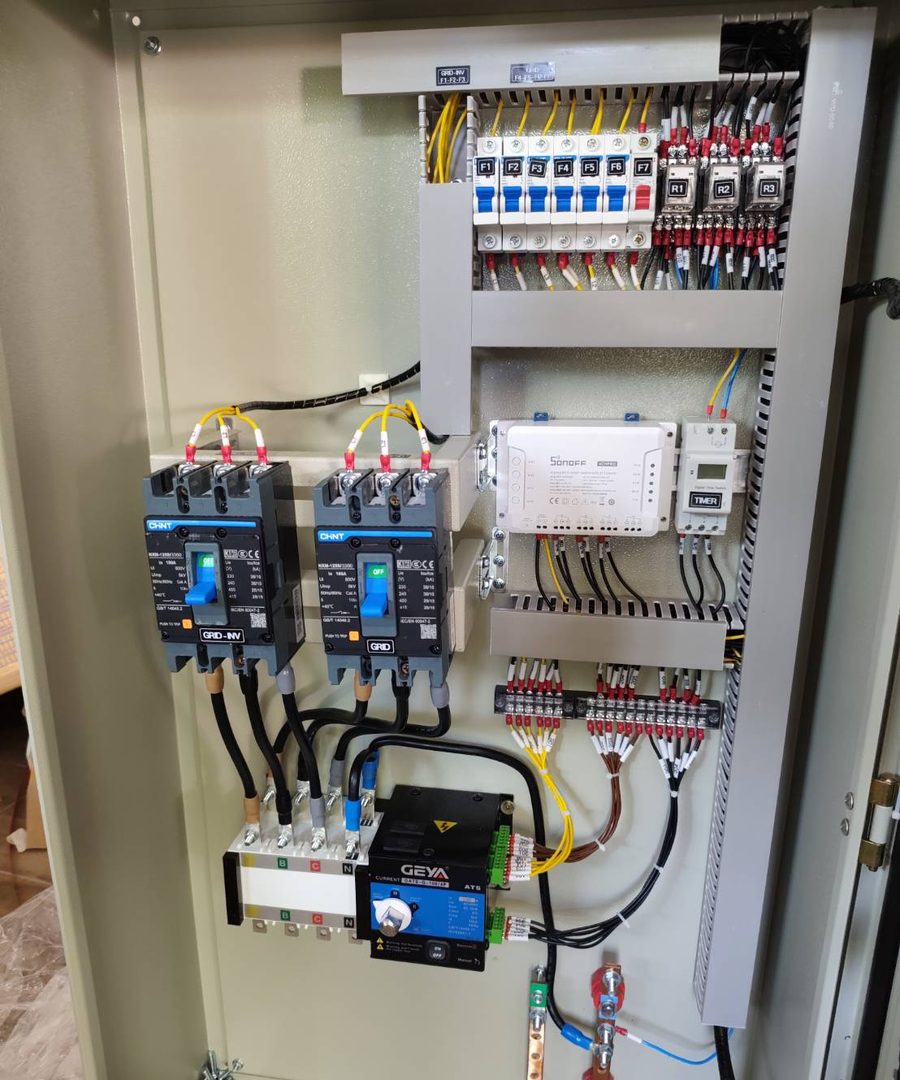
Labelled and laid out in the box so the next electrician can see what each one does.
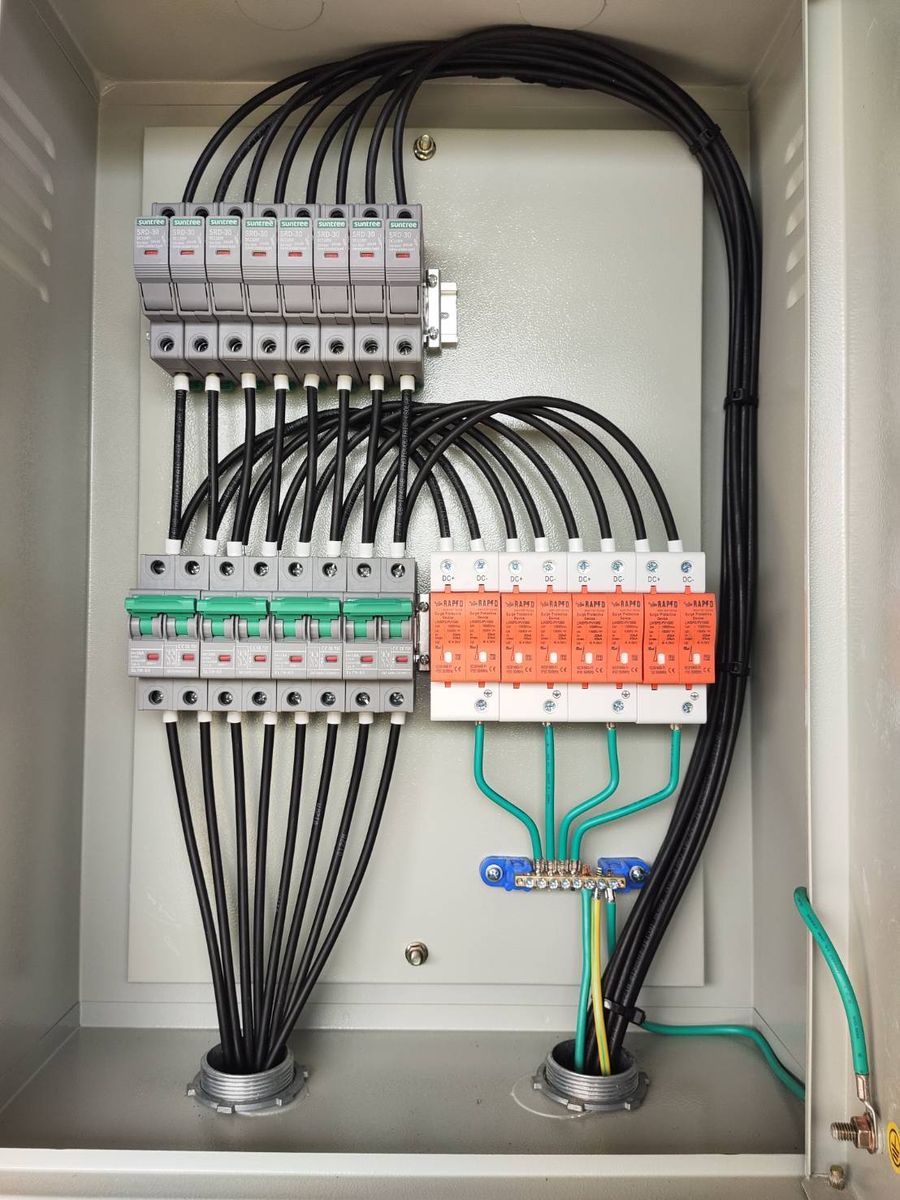
DC combiner box: SUNTREE fuse holders and breakers
Every solar string comes into the DC box through a SUNTREE fuse holder on both the positive and negative lines, then a two-pole SUNTREE DC breaker, before it reaches the inverter.
DC combiner box: SUNTREE fuse holders and two-pole DC breakers, one set per string
The fuse protects the string cable and panels if another string back-feeds a fault into it.
The two-pole DC breaker isolates each string on its own, so one string can be worked on while the rest keep producing.
Fuse holders open safely for checking and changing a fuse, with no live parts exposed.
Moulded-case breakers (MCCB)
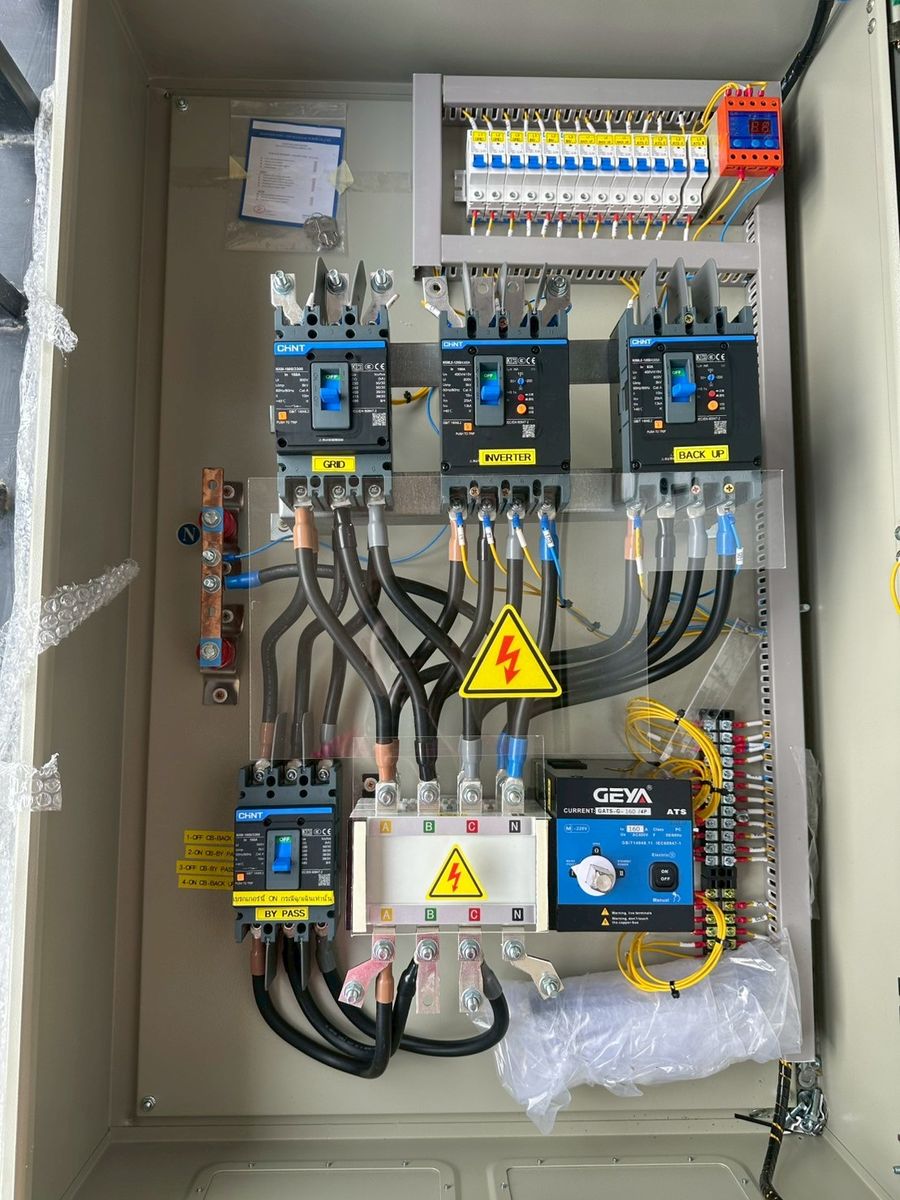
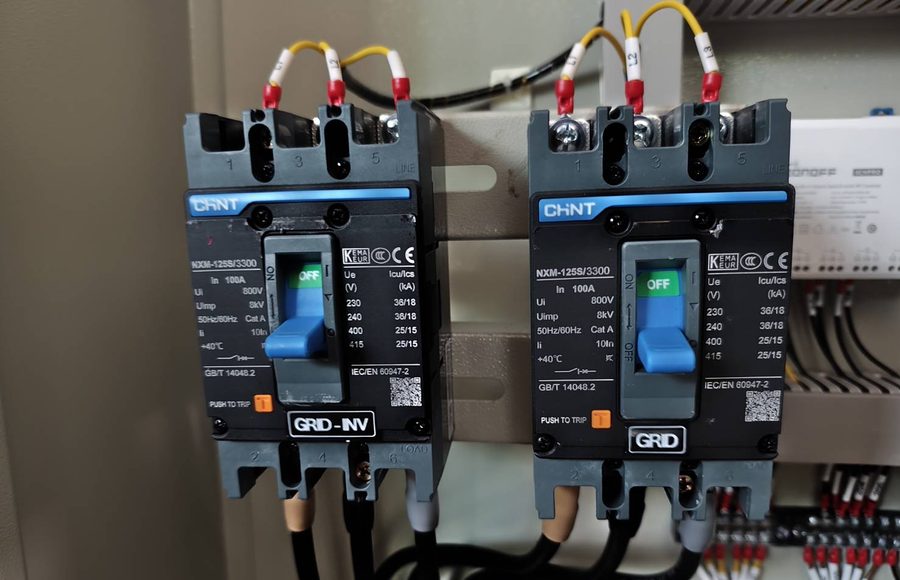
On the main feeders of a hybrid or backup system (the grid, inverter, backup and bypass circuits) we fit CHINT moulded-case circuit breakers. They carry the full feeder current, from about 63 A to 160 A and above, where small DIN-rail breakers stop.
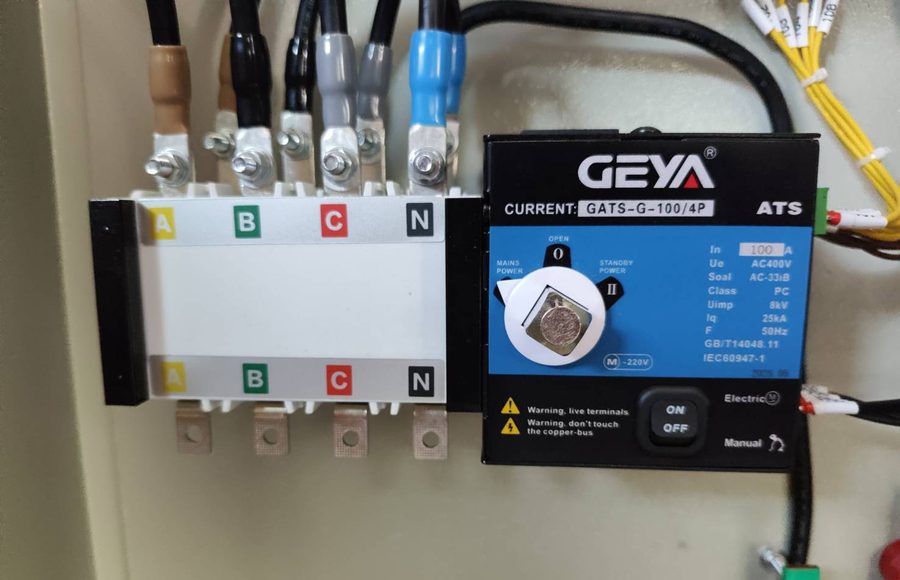
Changeover board: grid, inverter, backup and bypass MCCBs with a 4-pole ATS
A high breaking capacity, so a short circuit is cleared safely instead of welding the contacts shut.
Earth-leakage versions on the inverter and backup circuits, for protection against electric shock as well as overload.
Four-pole models where the neutral must switch with the phases, as on a changeover board.
Every breaker is labelled, and a bypass breaker with written switching steps keeps the building supplied while the ATS or inverter is serviced.
RCBO: one-way or two-way?
An RCBO combines earth-leakage, overload and short-circuit protection in one unit. In a solar home, the direction power flows through it matters.
Unidirectional
Built for power in one direction only, from the supply (Line / In) to the circuit (Load / Out). For ordinary lighting and socket circuits fed only from the grid.
Bidirectional
Certified by the maker to work safely with power flowing either way. For any circuit that solar, a battery, a generator or a V2G charger can feed.
How to tell them apart
A unidirectional RCBO has terminals marked Line / Load or In / Out, or an arrow, on the case or the front diagram.
A bidirectional RCBO has no fixed supply side, or its datasheet states that it is suitable for power flowing in both directions.
If the datasheet does not say bidirectional, we treat it as unidirectional.
How we wire them
A unidirectional RCBO only ever takes the supply on its Line / In terminals. An inverter, battery or generator is never connected to its Load side; fed backwards it may not trip, can be damaged, and can leave its electronics live during a fault.
On circuits that solar, a battery or a generator can feed, we fit RCBOs the maker certifies as bidirectional, wired to the maker's diagram.
Where the neutral must be switched, we use double-pole devices.
Installers and owners can order any of these parts through Solar ESS, with advice on sizing included. We do not publish prices here. Members can download our current price list with their password. Not a member yet? Book a consultation and ask for one.